San Francisco Attraction Guide
Mission Dolores & Dolores Park
Combine San Francisco’s oldest surviving building with one of its best neighborhood parks in this guide to Mission Dolores, Dolores Park, history, views and nearby attractions.
Mission Dolores and San Francisco’s Founding Era
Mission San Francisco de Asís—better known as Mission Dolores—reaches back to the Spanish colonial founding of San Francisco. The mission was established in 1776 near a freshwater lagoon and creek whose name, Dolores, became attached to the settlement.
The mission and the Presidio were the two principal institutions around which Spanish San Francisco developed. The surrounding landscape looked nothing like the dense city of today: wetlands, creeks, dunes and open ground dominated the peninsula.
This history also belongs to the Indigenous peoples of the San Francisco Peninsula. Ohlone-speaking communities lived here long before Spanish colonization, and missionization brought forced cultural change, labor demands, disease and devastating population loss. The surviving chapel is therefore both an architectural treasure and a place where the consequences of colonization must be understood.
The Old Mission: San Francisco’s Oldest Intact Building
The surviving adobe chapel was built in the late 18th century and is widely recognized as the oldest intact building in San Francisco. Its thick adobe walls, timber roof structure and compact proportions create a powerful contrast with the modern neighborhood surrounding it.
The Old Mission survived the Gold Rush transformation of San Francisco and the 1906 earthquake. Very few structures in the city provide such a direct physical connection with the colonial era.
Beside the chapel stands the larger Mission Dolores Basilica, completed in the early 20th century. Seeing the two side by side is a miniature architecture lesson: adobe mission construction beside a much later monumental church.
Mission Dolores Cemetery and Garden
The cemetery behind the mission is one of the most atmospheric historic spaces in San Francisco. It contains graves associated with early California settlers as well as Native people connected to the mission period.
Mission Dolores describes the cemetery as the only cemetery that remains within San Francisco city limits in its historic setting. The quiet garden, old markers and adobe walls create a striking contrast with nearby traffic and neighborhood life.
From Cemetery Land to Dolores Park
Mission Dolores Park has a layered history of its own. Before urban development, this was part of a wetter landscape fed by springs and Mission Creek on the lower slopes leading toward Twin Peaks.
In the 19th century, portions of the site were used as Jewish cemeteries. As San Francisco expanded and many cemeteries were relocated to Colma, neighborhood advocates proposed a public park. The city acquired the land in 1905.
Just one year later, the 1906 earthquake and fire turned the new park into an emergency refuge. More than 1,600 displaced residents were housed there, giving Dolores Park an important role in the city’s disaster history.
Dolores Park Today
Today, Mission Dolores Park is nearly 16 acres of lawns, palms, sports courts, playgrounds and open space. On sunny afternoons it becomes one of the most energetic public spaces in the city.
The park’s climate is part of the appeal. The Mission often receives more sun than western neighborhoods, so Dolores Park can be bright and warm even when fog hangs over the coast.
The park also sits at the meeting point of several major neighborhoods. Walk east into the Mission District & Murals, west toward the Castro District, or continue uphill toward Twin Peaks.
Skyline Views and Photography
The upper southwest side of Dolores Park provides the classic view. Downtown rises beyond layers of rooftops, palms and park lawn, giving photographers both a skyline and a strong neighborhood foreground.
Morning is calmer and cleaner visually. Late afternoon brings warmer light and more of the lively social atmosphere that defines the park. Sunset can be especially attractive when downtown catches the final light.
For a larger photo route, combine the park with Mission District & Murals for street art, Castro District for neighborhood color and Twin Peaks for the citywide panorama.
Indigenous History and the Mission Landscape
The Mission District did not begin in 1776. Indigenous communities had lived around the San Francisco Peninsula for thousands of years before Spanish colonization. The Mission Dolores area lay within a rich environment of freshwater, marsh, creek and seasonal resources that supported Native life long before the modern street grid existed.
Spanish missionization fundamentally altered that world. Native people were drawn or compelled into the mission system, where disease, labor demands and cultural disruption caused enormous loss. The mission cemetery and surviving records preserve parts of that history, but the physical building alone cannot tell the whole story.
For modern visitors, understanding this context changes the experience. The Old Mission is not merely an architectural curiosity; it is evidence of a colonial system that transformed the region and the lives of its first peoples.
Why Mission Dolores Is the Perfect Neighborhood Connector
The location is one of the strongest advantages of this attraction. Within a short walk, you can move from 18th-century mission history to colorful murals, Victorian and Edwardian houses, Castro Street, cafés and one of the city’s best public parks.
Head east and south into the Mission District & Murals for Balmy Alley, Clarion Alley and contemporary public art. Walk west toward the Castro District for LGBTQ+ history, theaters and neighborhood landmarks. Continue uphill toward Twin Peaks if you want a citywide viewpoint.
This concentration is why Mission Dolores and Dolores Park deserve a full attraction page rather than being treated as side notes inside a Mission District article.
Architecture: Adobe Mission Beside a 20th-Century Basilica
The architectural contrast is one of the best reasons to visit. The Old Mission is low, thick-walled and restrained. Its materials and proportions reflect an era before modern San Francisco. Immediately beside it, the Basilica rises with a far more monumental façade and vertical emphasis.
Stand across Dolores Street and look at the complex as a timeline. Few places in San Francisco let you compare such widely separated periods of religious architecture in one frame. From there, walk to Dolores Park and the skyline becomes the third layer: colonial chapel, early-20th-century basilica and modern downtown towers all within the same neighborhood.
Nearby Attractions
The Mission District & Murals is the most obvious extension, with Valencia Street, Mission Street, Balmy Alley and other mural corridors nearby.
The Castro District is close to the west, while Twin Peaks rises beyond the neighborhood. Architecture-minded visitors can also connect the mission with City Hall & Civic Center or Nob Hill & Grace Cathedral for a cross-section of San Francisco building history.
Helpful Hints
Visit the Old Mission first if history is your priority, then walk to Dolores Park for a completely different experience. The contrast is what makes the pairing so good.
Go earlier for quieter park photographs or later for the full neighborhood atmosphere. The J-Church Muni line runs along the park’s western edge, and the area is easy to explore on foot from both the Mission and Castro.
If you are building a half-day route, Mission Dolores + Dolores Park + Mission murals + Castro is one of the city’s strongest walkable combinations.
Nearby Attractions & Continue Exploring
Use these ETC attraction pages to build this stop into a larger sightseeing route:
- Mission District & Murals →
- Castro District →
- Twin Peaks →
- City Hall & Civic Center →
- Nob Hill & Grace Cathedral →
Private Sightseeing
See More of San Francisco in Less Time
A private small-group tour makes it easy to connect this attraction with neighborhoods, viewpoints and landmarks that would otherwise require multiple parking stops or transit changes.
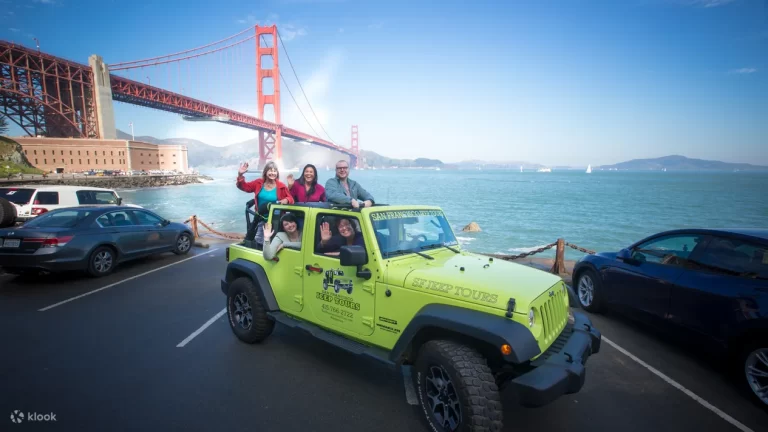
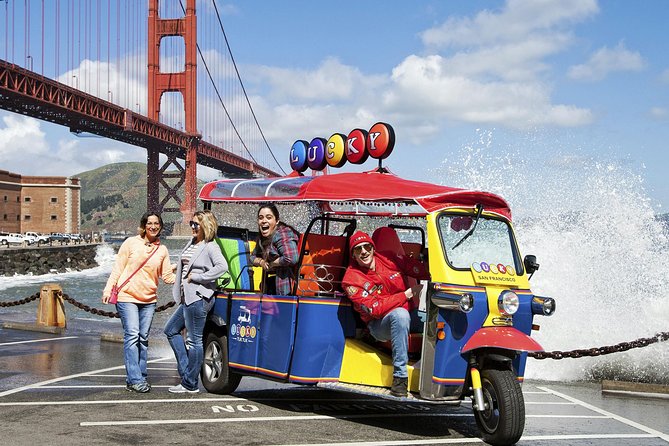
Private San Francisco Jeep Tour → | Private Lucky Tuk Tuk Tour →
Frequently Asked Questions
What is Mission Dolores?
Mission Dolores is the common name for Mission San Francisco de Asís, founded in 1776 during the Spanish colonial era.
Is Mission Dolores the oldest building in San Francisco?
Yes. The surviving Old Mission chapel is widely recognized as the oldest intact building in San Francisco.
Is Dolores Park close to Mission Dolores?
Yes. They are very close and can easily be visited together on foot.
Why is Dolores Park famous?
It is known for sunny lawns, neighborhood culture and excellent views of the downtown skyline.
What happened there after the 1906 earthquake?
Dolores Park served as a refugee camp for more than 1,600 displaced residents.
What should I combine with this visit?
The Mission District, Castro District and Twin Peaks are the strongest nearby additions.