San Francisco Attraction Guide
San Francisco City Hall & Civic Center
Explore San Francisco City Hall and the Civic Center Historic District, from the 1906 rebuilding and Beaux-Arts dome to public spaces, culture, photography and nearby attractions.
From the 1906 Earthquake to a New Civic Center
San Francisco’s present City Hall is the centerpiece of one of the most ambitious civic rebuilding stories in the United States. The earlier City Hall was badly damaged in the 1906 earthquake and fire. Rather than simply replace it, city leaders used the disaster as an opportunity to rethink the entire civic core.
Within a decade, San Francisco had built a new City Hall and a coordinated Civic Center meant to project confidence, order and permanence. The timing was deliberate: the city was preparing for the 1915 Panama-Pacific International Exposition, a celebration that also served as proof that San Francisco had recovered from catastrophe.
The current City Hall opened in 1915. Its location and monumental scale established the visual axis for the surrounding district and made the dome one of the defining features of the city skyline long before modern high-rises changed downtown.
Beaux-Arts Architecture and the City Beautiful Ideal
City Hall was designed by John Bakewell Jr. and Arthur Brown Jr., architects trained in the Beaux-Arts tradition. The style emphasizes symmetry, classical forms, grand entrances and ceremonial spaces. San Francisco’s Civic Center is considered one of the strongest American examples of the City Beautiful movement.
The building’s dome is the star. It rises above a balanced façade of columns, pediments and stone ornament. The scale is intentionally monumental, but the details reward closer inspection: sculptural elements, rhythmic windows, broad stairs and carefully composed entrances all contribute to the effect.
The broader district was designed as an ensemble. City Hall faces Civic Center Plaza, while cultural and government buildings around it reinforce a sense of civic order. That coordinated planning is what makes the area feel more like a European-style civic campus than a typical American downtown block.
Inside the Rotunda and Grand Staircase
Step inside and the architecture becomes even more theatrical. The Rotunda rises beneath the dome, surrounded by marble, columns and broad ceremonial stairs. The Grand Staircase is one of San Francisco’s most photographed interiors and a favorite setting for civil weddings.
City Hall is still a working government building. Visitors share the space with city employees, couples getting married, public meetings and residents handling everyday civic business. That makes the interior feel alive rather than preserved behind museum ropes.
Entry requires security screening. City guidance currently notes metal detectors and bag checks, accessible entrances on Van Ness Avenue and Grove Street, elevators and accessible restrooms. Government operations and special events can affect access, so current hours are worth checking before an interior-focused visit.
The Civic Center Historic District
The City Hall experience becomes much richer when you treat the surrounding Civic Center as part of the attraction. The historic district spans roughly 15 blocks and includes monumental civic buildings, performance venues, museums and public plazas.
Nearby landmarks include the War Memorial Opera House, Veterans Building, Davies Symphony Hall, Asian Art Museum, Main Library, Civic Center Plaza and UN Plaza. Together they show how San Francisco turned post-1906 rebuilding into a statement about civic identity.
The district has multiple historic designations, including National Register listing, local landmark status and National Historic Landmark recognition. Those designations reflect not only architecture but the importance of Civic Center as a stage for political, social and cultural events.
A Stage for San Francisco History
Civic Center has repeatedly served as the city’s public living room. Marches, celebrations, protests, memorials and political gatherings have filled the plaza and surrounding streets for more than a century.
The district is associated with major national and international events as well. San Francisco’s role in the founding of the United Nations in 1945 and the signing of the 1951 peace treaty with Japan are tied to the Civic Center and War Memorial complex.
Later decades brought civil-rights demonstrations, antiwar protests, LGBTQ+ political history and other movements into the same public spaces. The result is a district where architecture and civic action are inseparable.
Best Photo Angles
The classic exterior shot comes from Civic Center Plaza looking west toward the dome. A centered composition emphasizes the building’s symmetry; moving to the edges of the plaza brings trees, sculpture and everyday city life into the frame.
Inside, the Rotunda and Grand Staircase are the essentials. Wide angles emphasize scale, while tighter compositions capture stone details and balustrades. People can be useful for scale in this enormous interior.
At night, special illumination can transform the dome. If you are building an architecture-focused day, pair City Hall with Nob Hill & Grace Cathedral and Union Square for very different examples of San Francisco urban design.
The Dome: San Francisco’s Civic Crown
The dome is what separates San Francisco City Hall from an ordinary municipal building. It rises high above the surrounding roofs and can be seen from multiple parts of the city, making government architecture part of the skyline itself. The dome’s visual prominence was intentional: City Hall was designed to anchor the new Civic Center and give the rebuilt city a strong civic symbol after 1906.
From street level, the dome can appear almost detached from the lower building because of its scale. From Civic Center Plaza, the axial composition becomes clearer: plaza, façade, columns and dome are stacked one behind another. This is one reason the plaza remains the strongest exterior viewing point.
At night, illumination can turn the dome into a completely different landmark. Special lighting is often used to mark civic events, celebrations and causes. For photographers, that makes City Hall one of the rare San Francisco attractions worth revisiting after dark even if you have already seen it in daylight.
Asian Art Museum, Opera, Symphony and Library
Civic Center works especially well for travelers who enjoy culture because major institutions sit within a few blocks. The Asian Art Museum occupies the former Main Library building and contains one of the country’s strongest collections devoted to Asian art. Across the district, the War Memorial Opera House and Davies Symphony Hall make Civic Center a major performing-arts center.
The Main Library faces Civic Center Plaza and adds another important public institution to the district. Together these buildings make the area useful on days when visitors want architecture, museums and performance rather than scenic overlooks.
The concentration is unusually efficient. Instead of crossing the city between unrelated attractions, you can build a full cultural half day around City Hall and then continue to Union Square or Nob Hill & Grace Cathedral.
Nearby Attractions and Easy Extensions
From Civic Center, Union Square is an easy downtown continuation. Head northwest for Nob Hill & Grace Cathedral, or move southwest toward the Castro District and Mission District & Murals.
For a completely different scale, Twin Peaks gives the broad skyline view that puts Civic Center into geographic context. On a clear day, it is an excellent before-or-after stop for photographers.
Helpful Hints
Allow 30 to 60 minutes for City Hall itself, and more if you want to explore the broader Civic Center. Architecture lovers can easily spend two or three hours in the district.
Weekdays are generally the most practical time to see the working interior. Public transportation is convenient: Civic Center BART and multiple Muni lines serve the area.
For the best visual variety, see the building in daylight and then return after dark if the dome is illuminated. The two experiences feel surprisingly different.
Nearby Attractions & Continue Exploring
Use these ETC attraction pages to build this stop into a larger sightseeing route:
- Union Square →
- Nob Hill & Grace Cathedral →
- Mission District & Murals →
- Castro District →
- Twin Peaks →
Private Sightseeing
See More of San Francisco in Less Time
A private small-group tour makes it easy to connect this attraction with neighborhoods, viewpoints and landmarks that would otherwise require multiple parking stops or transit changes.
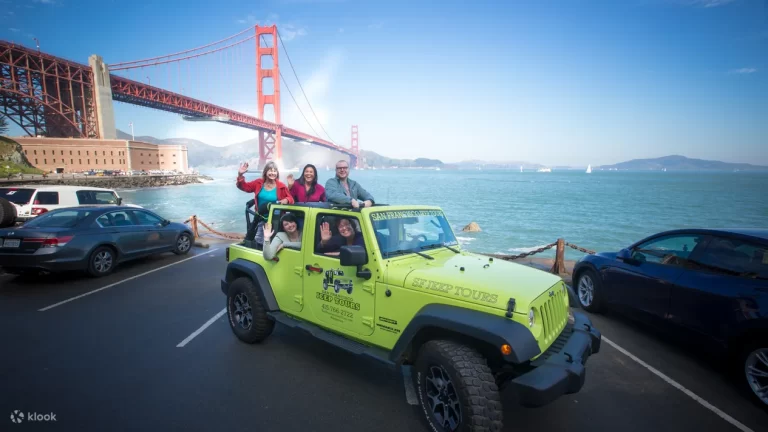
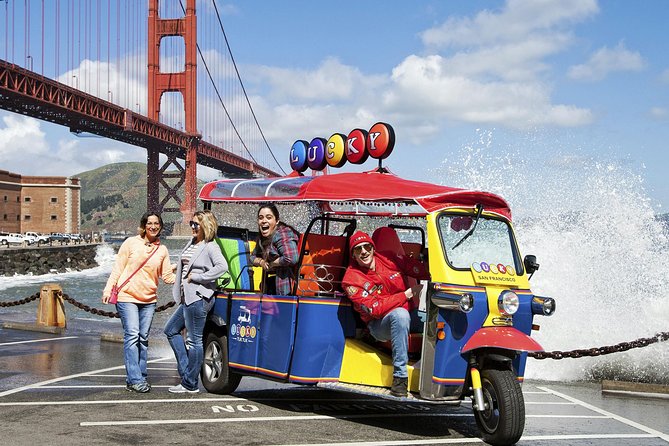
Private San Francisco Jeep Tour → | Private Lucky Tuk Tuk Tour →
Frequently Asked Questions
Is San Francisco City Hall open to visitors?
Yes. It is an active public building and visitors can generally enter during public hours after security screening, subject to events, holidays and government operations.
When did the current City Hall open?
The current Beaux-Arts City Hall opened in 1915 as part of San Francisco’s post-1906 rebuilding.
Who designed San Francisco City Hall?
John Bakewell Jr. and Arthur Brown Jr. designed the building.
What is the best photo angle?
The classic exterior view is from Civic Center Plaza looking toward the dome; inside, the Rotunda and Grand Staircase are the signature compositions.
What attractions are near City Hall?
Union Square, Nob Hill, Grace Cathedral, the Mission District, Castro and Twin Peaks are natural additions.
How much time should I allow?
Plan about 30 to 60 minutes for City Hall itself and two or more hours if you want to explore the broader Civic Center.