San Francisco Attraction Guide
Fort Mason
Explore Fort Mason’s military and waterfront history, World War II Port of Embarkation, Great Meadow, Fort Mason Center and Golden Gate Bridge views.
Why Fort Mason’s Location Mattered
Fort Mason occupies a strategic bluff between Fisherman’s Wharf and the Marina. Its elevated position overlooking the bay explains why Spanish, Mexican and U.S. authorities repeatedly used the site for defense.
Spanish forces established an early battery here in 1797. After the United States took control of California, the Army eventually formalized the land as a military reservation. The site became part of the network protecting ships, gold traffic and access through the Golden Gate.
Black Point, Point San Jose and the Army Post
During the Gold Rush housing boom, civilians built homes on portions of the military reservation in an area called Black Point. When the Civil War raised new concerns about coastal defense, the Army reasserted control and developed Point San Jose as a functioning military post.
In 1882, the post was renamed Fort Mason for Colonel Richard Barnes Mason, California’s second U.S. military governor. Historic officers’ quarters and other buildings still preserve the appearance of the post.
After the 1906 earthquake and fire, Fort Mason served briefly as a temporary city hall and a refuge for displaced residents, adding an unexpected civic chapter to the site’s military story.
The San Francisco Port of Embarkation
Fort Mason’s most important national role came as headquarters of the San Francisco Port of Embarkation. During World War II, it coordinated a vast network of Bay Area shipping facilities moving troops and cargo into the Pacific theater.
National Park Service records note that the port administered through Fort Mason moved about 1.6 million troops and 23 million tons of cargo during World War II. Those figures explain the giant lower piers and warehouses better than any architectural description could.
As air transport replaced troop ships, the military role declined. Fort Mason later became part of Golden Gate National Recreation Area, created in 1972.
Upper Fort Mason and the Great Meadow
Upper Fort Mason is the greener, quieter half of the site. Historic Army buildings sit around lawns and paths, while the Great Meadow opens toward the Marina and bay.
The meadow provides clear-day views of the Golden Gate Bridge and functions as a neighborhood park for picnics, walking and recreation. A paved loop of about half a mile makes it an easy scenic walk.
The upper post is also the key pedestrian link between Fisherman’s Wharf and the Marina, which is why it belongs in ETC’s waterfront attraction network.
Lower Fort Mason and Fort Mason Center
Lower Fort Mason occupies former military piers and warehouses. Today, Fort Mason Center for Arts & Culture uses these industrial buildings for galleries, performances, festivals, restaurants, markets and public events.
The adaptive reuse is part of what makes the place interesting. Buildings designed for military logistics now host art and community life without losing their industrial character.
Check the event calendar before visiting; an ordinary weekday and a major festival weekend can feel like two completely different attractions.
Views and Photography
From Upper Fort Mason, the Golden Gate Bridge appears beyond the Marina. The Great Meadow gives a broad, relaxed foreground that is very different from more famous bridge viewpoints.
Lower Fort Mason offers piers, warehouse geometry, sailboats and open water. Late afternoon is particularly attractive when the western light begins to warm the bayfront.
For a longer photography route, continue west to Marina Green, Palace of Fine Arts and the Presidio.
The Missing Link Between Fisherman’s Wharf and the Presidio
Fort Mason’s real strategic value for visitors is geographic. Walk west from Fisherman’s Wharf through Aquatic Park, cross Upper Fort Mason, descend to the Marina, continue through Marina Green and the Palace of Fine Arts, then enter the Presidio.
This is one of the city’s best continuous sightseeing corridors because the environment changes gradually from historic tourism waterfront to parkland to Golden Gate Bridge views.
Rather than treating Fort Mason as a separate destination, use it as the bridge that connects the Wharf to the Marina and Presidio clusters.
Helpful Hints
Include both Upper and Lower Fort Mason if you have time. The upper area is better for history, lawn and views; the lower area is better for arts, events and waterfront atmosphere.
Fort Mason is ideal for walking. If you are already at Fisherman’s Wharf, there is little reason to move a car just to visit the next waterfront stop.
Allow 45 to 90 minutes for a basic visit. Add more time for an event, meal or a full walk toward Marina Green and the Presidio.
Fort Mason After the 1906 Earthquake
The 1906 earthquake and fire temporarily transformed Fort Mason from a military post into part of the city’s emergency response system. With much of downtown damaged or destroyed, the site provided shelter and civic space at a moment when San Francisco desperately needed both.
That episode makes Fort Mason a useful companion to the City Hall & Civic Center story. One site represents the emergency aftermath of 1906; the other represents the monumental rebuilding that followed. Together they show how the city moved from disaster response to civic reinvention.
From Military Surplus to Golden Gate National Recreation Area
By the mid-20th century, Fort Mason’s military importance was declining. When surplus military land around the Golden Gate became the focus of conservation campaigns, Fort Mason became part of a much larger idea: creating a national park woven directly into a major city.
Golden Gate National Recreation Area was established in 1972. Fort Mason became one of its urban anchors and eventually its headquarters. The creation of the Great Meadow and removal of some temporary military buildings helped shift the upper post toward public recreation.
This transition is part of a larger Bay Area pattern. The Presidio, Fort Point, Fort Baker and Marin Headlands all preserve former military landscapes in public use.
Markets, Food, Events and Everyday Fort Mason
Fort Mason Center is not a static historic site. Depending on the day, visitors may find exhibitions, performances, food businesses, markets, festivals or special events inside the former warehouses and piers.
That changing calendar makes Fort Mason one of the northern waterfront’s most flexible attractions. You can come for military history, return another weekend for an art fair, then pass through again on a waterfront walk toward Marina Green.
For locals, this everyday reuse is part of the success of the site. It remains historically legible while functioning as a contemporary cultural district.
Nearby Attractions & Continue Exploring
Use these ETC attraction pages to build this stop into a larger sightseeing route:
Private Sightseeing
See More of San Francisco in Less Time
A private small-group tour makes it easy to connect this attraction with neighborhoods, viewpoints and landmarks that would otherwise require multiple parking stops or transit changes.
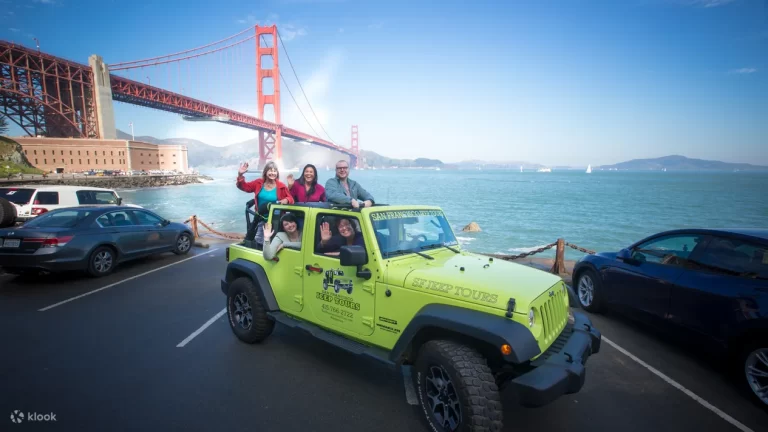
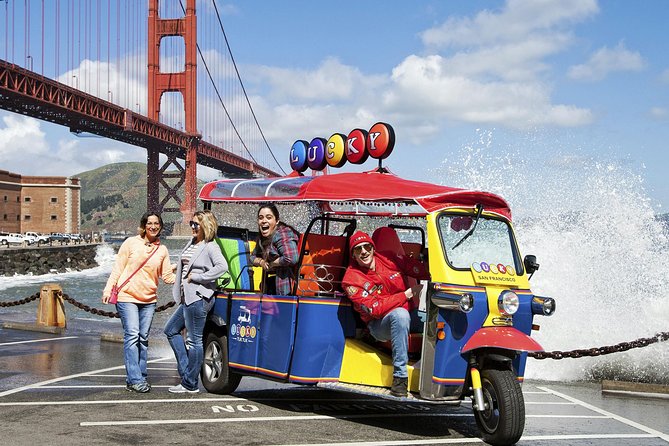
Private San Francisco Jeep Tour → | Private Lucky Tuk Tuk Tour →
Frequently Asked Questions
What is Fort Mason?
Fort Mason is a former U.S. Army post on San Francisco’s northern waterfront that is now part of Golden Gate National Recreation Area.
Why is Fort Mason historically important?
It served as headquarters for the San Francisco Port of Embarkation, which moved huge numbers of troops and cargo during World War II.
What is Fort Mason Center?
Fort Mason Center for Arts & Culture occupies former military piers and warehouses and hosts cultural events, food businesses and exhibitions.
Can you see the Golden Gate Bridge from Fort Mason?
Yes. Upper Fort Mason and the Great Meadow provide good clear-day views toward the bridge.
Is Fort Mason close to Fisherman’s Wharf?
Yes. It sits immediately west of Fisherman’s Wharf.
How long should I spend there?
About 45 to 90 minutes works for the historic core and Great Meadow; allow longer for events or a waterfront walk.