San Francisco Attraction Guide
Golden Gate Park San Francisco
Plan a Golden Gate Park visit with guides to its museums, gardens, lakes, bison, windmills, recreation areas and lesser-known local favorites.
Golden Gate Park: History, Story & Key Facts
From Sand Dunes to a 1,000-Acre Urban Park
Golden Gate Park covers more than 1,000 acres and is larger than New York’s Central Park. In the mid-19th century, much of this part of San Francisco consisted of windswept sand dunes rather than the lush landscape visitors see today.
William Hammond Hall and longtime park superintendent John McLaren were central figures in turning the dunes into a public park. Work began in the 1870s, using irrigation, strategic planting and hardy vegetation to stabilize sand and create a green landscape.
By the late 19th century the park had become one of San Francisco’s great civic spaces, and it continued to accumulate museums, gardens, recreation areas and cultural institutions.
Top Things to Do in Golden Gate Park
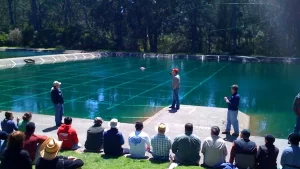
Watch events or explore the Polo Field, one of the park’s major open recreation areas.
Rent a boat when available and explore Blue Heron Lake, historically known as Stow Lake, with Strawberry Hill rising from its center.
Look for dancing, community events and performances around the Music Concourse and other gathering spaces.
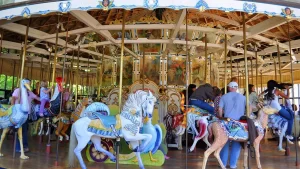
Take children to the historic carousel and Koret Children’s Quarter.
Attend concerts and performances at park venues including the Music Concourse and Spreckels Temple of Music.
Explore gardens including roses, dahlias, tulips and the landscaped spaces around museums and lakes.
Visit major cultural institutions including the de Young Museum, California Academy of Sciences, Conservatory of Flowers and Japanese Tea Garden.
17 Fun Facts and Historic Details
The park was built on former sand dunes.
The Japanese Tea Garden traces its roots to the 1894 California Midwinter International Exposition and is widely described as the oldest public Japanese garden in the United States.
The Conservatory of Flowers is one of the oldest public conservatories in the Western Hemisphere.
The de Young Museum grew from an exposition-era fine-arts building associated with the 1894 California Midwinter International Exposition.
The park has maintained a bison herd for generations; the Bison Paddock remains one of its most unexpected attractions.
Blue Heron Lake was engineered in the late 19th century and became a favorite boating and picnic destination.
The Dutch Windmill, built in the early 1900s, originally pumped water for park irrigation.
Shakespeare Garden contains plants associated with Shakespeare’s works.
The Conservatory of Flowers is famous for rare tropical plants, including periodic corpse-flower blooms.
Murphy Windmill also played a major role in pumping groundwater for irrigation.
The Music Concourse and Spreckels Temple of Music reflect the park’s long history of fairs, public music and civic gathering.
The de Young has held major collections of art and cultural artifacts across its history.
The Japanese Tea Garden developed from the Japanese Village exhibit created for the Midwinter Exposition.
The National AIDS Memorial Grove was established as a living memorial to people affected by the AIDS epidemic.
The California Academy of Sciences includes living exhibits such as African penguins and a multi-story indoor rainforest.
The park’s lakes and ponds, including Blue Heron Lake and Spreckels Lake, have long supported boating, model-yacht sailing and recreation.
Golden Gate Park remains a city within the city: museums, sports, gardens, lakes and wildlife all coexist in one long corridor to the Pacific.
What to See and Do at Golden Gate Park
Golden Gate Park is more rewarding when you understand the surrounding neighborhood and allow enough time to see more than the obvious photo angle. The following points combine the practical visitor information preserved from the original ETC guide with a more useful trip-planning approach.
- Do not try to see every attraction in one quick visit. The park stretches for several miles, and the museum district in the east feels very different from the western end near the bison, windmills and Ocean Beach.
- Families may want to center a visit on the Academy of Sciences and Koret Children’s Quarter. Art-focused visitors may prefer the de Young, Japanese Tea Garden and nearby gardens.
- Nature-focused visitors should consider Blue Heron Lake, Strawberry Hill, the Botanical Garden, redwood groves and the western park.
- Because some museums and gardens require admission while much of the outdoor park is free, a Golden Gate Park day can be tailored to almost any budget.
Planning Your Visit
How to Plan a Visit to Golden Gate Park
Golden Gate Park is far larger than many first-time visitors expect. Choose a few priorities before arriving instead of trying to see everything at once. The eastern half contains several major museums and gardens, while the western half becomes more open and leads toward the bison, windmills and Ocean Beach. Walking works well within individual clusters, but crossing the entire park takes time.
Local planning tip: San Francisco’s hills, microclimates and traffic mean attractions that look close on a map are not always equally easy to combine. Grouping nearby stops saves time and usually creates a better sightseeing day.
How Golden Gate Park Fits Into a San Francisco Itinerary
For first-time visitors, Golden Gate Park works best as part of a geographic cluster rather than as an isolated checkbox. That approach reduces travel time and gives you more context for how San Francisco’s neighborhoods, waterfront, hills and historic sites connect.
If you have only two to four hours in the city, prioritize the attraction itself plus two or three nearby stops. With half a day, add a neighborhood walk or waterfront segment. With a full day, combine this area with a second major district such as the Golden Gate Bridge/Presidio corridor, Fisherman’s Wharf, Chinatown/North Beach, or Golden Gate Park.
Weather can also change the order of your day. Clear conditions are ideal for viewpoints, while fog or wind can make museums, neighborhood walks and food stops more appealing until visibility improves.
Why Golden Gate Park Is Worth Visiting
Golden Gate Park can be many different days depending on what you care about. A family might spend most of its time at the Academy of Sciences and children’s playground. Art lovers may focus on the de Young, Japanese Tea Garden and nearby gardens. Nature-minded visitors can skip museums entirely and explore Blue Heron Lake, Strawberry Hill, redwood groves and the western end of the park. The park’s unusual strength is that all of those experiences occupy the same enormous green corridor.
Photography Tips
The park is excellent for photography because the scenery changes constantly. The Conservatory of Flowers provides Victorian architecture and gardens; the Japanese Tea Garden offers bridges and carefully composed landscapes; Blue Heron Lake provides reflections and wooded paths; the bison create an unexpected wildlife scene; and the windmills near the western end provide one of the park’s most distinctive historic images.
Visiting With Families
For families, the Academy of Sciences and Koret Children’s Quarter are the obvious anchors, but the park also gives children room to move between structured attractions. Boats, open lawns, lakes, the bison and carousel can break up a museum-heavy day. Because distances are large, families should choose one section of the park rather than repeatedly walking from one end to the other.
Accessibility, Transportation & Practical Considerations
Most major museums and developed attractions have accessible entrances, but the park includes hills, trails and long distances. Transit routes cross and border the park, and bicycles or ride-share can help connect distant sections. Visitors with limited mobility should choose a cluster—such as the Music Concourse museum district—rather than trying to traverse the entire park.
Common Mistakes to Avoid
- Thinking Golden Gate Park can be covered thoroughly in an hour.
- Planning attractions at opposite ends of the park without accounting for travel time.
- Assuming every garden or museum is free because the outdoor park is free.
- Skipping the western half and missing the bison, windmills and approach to Ocean Beach.
- Overbooking museum tickets and leaving no time for the outdoor park itself.
Sample Itinerary Ideas
With two hours, focus on one cluster such as the Music Concourse, Japanese Tea Garden and Conservatory area. With half a day, add Blue Heron Lake or the Botanical Garden. With a full day, move west toward the Bison Paddock, windmills and Ocean Beach. Golden Gate Park also pairs naturally with Haight-Ashbury, the Presidio or the western neighborhoods.
How Much Time Should You Allow?
A quick stop at Golden Gate Park can work when you are fitting several attractions into a short San Francisco visit, but the better experience usually comes from allowing enough time to understand the history and connect the attraction with the surrounding area. If your schedule is tight, prioritize the signature feature and one nearby attraction. If you have half a day, add two or three nearby stops and time for walking, photographs and food.
San Francisco travel time is often determined by hills, traffic and parking rather than straight-line distance. That is why the nearby-attraction links on this page are intentionally clustered geographically.
Weather and What to Wear
San Francisco has strong microclimates. Waterfront and hilltop attractions can be cool and windy even when inland neighborhoods are sunny. Layers are the safest choice year-round. Comfortable walking shoes are useful for almost every attraction in this guide, and especially important when your route includes hills, historic stairs, waterfront paths or long museum days.
Nearby San Francisco Attractions
These ETC attraction guides make the most sense to combine with Golden Gate Park:
Local Context: Understanding This Part of San Francisco
Golden Gate Park makes more sense when you look at the surrounding geography. Nearby attractions such as California Academy of Sciences, de Young Museum, Japanese Tea Garden, Conservatory of Flowers, SF Botanical Garden, Blue Heron Lake & Strawberry Hill are connected not only by distance but by the way San Francisco developed around the bay, waterfront, military land, hills and historic neighborhoods. Visitors who group these places together see more of the city while spending less time crossing town.
For first-time visitors, this is also a good reminder that San Francisco is compact but not effortless. A mile can include steep grades, heavy traffic, crowded transit or limited parking. Walking is often rewarding because it reveals architecture and neighborhood details, but planning the direction of travel matters. Whenever possible, work downhill or along the waterfront rather than creating unnecessary climbs.
Another useful strategy is to separate “must-see” attractions from “nice-if-nearby” stops. Give your priority attraction enough time, then use nearby sights as flexible additions. This prevents a San Francisco day from becoming a race between parking spaces.
See It on a Private Tour
Private Sightseeing and Golden Gate Park
Golden Gate Park can be included as part of a broader private city route when you want to combine the park with neighborhoods such as Haight-Ashbury, the Presidio, the Golden Gate Bridge and other major sights without making the park your entire day.
Is Golden Gate Park a Good Choice for Your Trip?
For first-time visitors: Yes, especially if this attraction matches the part of San Francisco you already plan to explore. The best first visits combine famous sights with a few places that reveal neighborhood history and everyday city life.
For repeat visitors: Spend less time on the obvious viewpoint and more time on the history, side streets, trails, architecture or nearby attractions you may have skipped before.
For short stays: Keep the stop focused and use the nearby-attraction cluster on this page to avoid unnecessary travel.
For photographers: Leave flexibility for weather and changing light. San Francisco fog can hide a landmark and then clear surprisingly quickly.
For travelers who dislike crowds: Earlier visits, weekdays and less-obvious viewpoints often provide a calmer experience, though crowd patterns vary by season and event schedule.
Frequently Asked Questions About Golden Gate Park
How much time do you need in Golden Gate Park?
A focused visit can take two to three hours, while a museum-and-gardens day can easily fill most of a day. The park is large enough that choosing your priorities in advance helps.
What are the most popular attractions in Golden Gate Park?
Major draws include the California Academy of Sciences, de Young Museum, Japanese Tea Garden, Conservatory of Flowers, San Francisco Botanical Garden and the park’s lakes and gardens.
Can you walk across Golden Gate Park?
Yes, but the park stretches for several miles. Walking is excellent within individual areas, though visitors trying to see attractions at opposite ends should plan transportation or extra time.
Is Golden Gate Park only for museums?
No. Beyond museums, the park contains gardens, lakes, wildlife, sports areas, historic structures, windmills, wooded groves and many free outdoor spaces.
Keep Exploring San Francisco
Electric Tour Company has been helping visitors explore San Francisco since 2004. Use our attraction guides and planning articles to compare neighborhoods, viewpoints, historic sites and private sightseeing options before you build your day.
San Francisco Attractions → | Travel Guides → | Travel FAQ →