Home › San Francisco Attractions › Fisherman’s Wharf › Historic Fishing Fleet
The Working Harbor Behind the Tourist District
Exploring the Historic Fishing Fleet at Fisherman’s Wharf
When you stroll through Fisherman’s Wharf, you are not just walking through one of San Francisco’s busiest visitor districts. You are stepping into a maritime neighborhood whose identity reaches back to the 1800s—shaped by Italian immigrant fishermen, small sailboats, fog, tides, hard work, changing engines and food traditions that still define the Wharf today.
The modern harbor is quieter and more technologically advanced than the old waterfront, but the fishing fleet remains the key to understanding why Fisherman’s Wharf exists in the first place.
6 Facts About the Original Fishermen of Fisherman’s Wharf
1. Italian Immigrant Roots
First-generation Italian immigrants were central to the Wharf’s early fishing community. Many came from maritime regions of Italy and brought with them not only fishing skills but also songs, family traditions, boat styles and food culture.
Old Wharf accounts describe fishermen who could sing a Verdi aria even in the thick fog outside the Golden Gate. That detail captures something important: the fishing community was practical and hard-working, but it was also intensely social and rooted in Old World traditions.
2. Weather Wisdom Before Weather Apps
Early fishermen learned to read the water and sky. Historic accounts say they watched the moon, tides, halos around the moon and the behavior of marine animals.
- Moon in the east: interpreted as an incoming tide.
- Moon in the west: associated with an outgoing tide.
- A ring around the moon: taken as a warning of rain.
- Porpoises behaving unusually around boats: sometimes read as a sign of rough weather ahead.
These observations belonged to generations of practical experience rather than modern meteorology, but they show how much early crews depended on close observation of the natural world.
3. Feluccas: Little Boats With Italian DNA
The original fishing boats were feluccas, small lateen-rigged craft modeled on Mediterranean boats familiar to Italian fishermen.
Period descriptions often portray them as painted green and carrying the name of a patron saint on the hull. Their distinctive triangular sails and low profiles became an early visual symbol of the San Francisco fishing community.
4. Creative Commuting by Grappling Hook
One of the more colorful stories from the old Wharf says fishermen sometimes caught rides home by throwing a grappling hook into the rudder chain of a passing steamer.
The steamer crews reportedly did not always appreciate the extra passenger. It is the kind of waterfront story that should be treated as historic lore rather than a transportation recommendation—but it says a lot about the improvisational culture of the old fishing fleet.
5. Fishing Was Not a Rich Man’s Job
Older Wharf histories describe some early fishermen earning only $2 to $5 per week. Prices were radically different then—a loaf of bread could cost only a few cents—but the larger point remains: fishing was difficult physical work with uncertain income.
6. Singing Through the Fog
In thick San Francisco fog, boats could be close together without being visible. Historic accounts say singing became an informal way to announce a nearby boat’s presence.
You might not be able to see the next fisherman, but you could hear him.
From Feluccas to Diesel-Powered Craft
First Generation: Sail-Powered Feluccas
These small fishing boats carried the visual language of Mediterranean fishing villages into San Francisco Bay. Their lateen sails were practical in shifting winds and required no engine fuel—only skill, muscle and patience.
Second Generation: Monterey Hull Boats
Gasoline engines transformed the fleet. The small but dependable Monterey Hull boat became one of the defining fishing craft of the Wharf.
Engines changed everything:
- Fishermen could work more days of the year.
- Boats could travel farther from the harbor.
- Crews were less dependent on wind direction.
- Engines could help haul nets and lines.
- Fishing became more predictable and commercially efficient.
If the felucca was the horse-and-cart of the old fleet, the Monterey boat was something like its Model T.
Third Generation: Larger Diesel-Powered Commercial Boats
Diesel-powered craft brought greater range, larger holds, stronger hauling power and modern navigation equipment.
Today these larger commercial vessels can stand beside older Monterey-style boats, making the fishing harbor a visible record of changing fishing technology.
Cioppino: A Bowl of Fisherman’s Wharf History
No discussion of the historic fishing fleet feels complete without cioppino, San Francisco’s famous seafood stew.
The dish is rooted in the Italian-American fishing community and is traditionally built around a mix of whatever seafood was available—fish, crab, shrimp, shellfish and other catch—cooked in a tomato-based broth with vegetables, herbs and wine.
Its appeal is practical as much as culinary. A working fishing community naturally produced mixed catch, and a large shared stew was an efficient way to turn varied seafood into a hearty meal.
Over time, cioppino moved from fishermen’s tables into restaurants and became one of the dishes visitors most strongly associate with San Francisco.
The Fishing Fleet Today
Modern Fisherman’s Wharf is famous for tourism, but the harbor still connects the district with commercial fishing.
You may see diesel fishing vessels, Monterey-style boats, crab pots and other gear depending on season and activity. The exact mix changes because the harbor is a workplace, not a historical reenactment.
That is precisely why the fleet remains valuable. It keeps Fisherman’s Wharf from becoming only a themed waterfront shopping area.
The harbor is also a living bridge between generations. The district still carries family names and traditions tied to descendants of early fishing families, even as the industry has changed dramatically.
How to Visit the Historic Fishing Fleet
Time Needed
Allow about 30–60 minutes for a focused harbor walk.
Best Time
Daylight is best for viewing boats and working activity.
Cost
Viewing the fishing harbor from public walkways is free.
Etiquette
Do not block crews, climb on boats or enter restricted working areas.
Photography
Use public paths and treat fishermen and crews as working people, not performers.
Best Pairing
Combine with the crab stands, Memorial Chapel, Musée Mécanique and Pier 45.
12 Fun Facts About the Fisherman’s Wharf Fishing Fleet
- Italian immigrant fishermen were central to the early fishing community.
- Historic accounts describe fishermen singing Verdi arias in heavy fog.
- Singing could also help crews know another boat was nearby when visibility was poor.
- Early fishermen used environmental signs such as moon position, halos and animal behavior to judge conditions.
- Feluccas were modeled on Mediterranean fishing boats.
- Period descriptions say some feluccas were painted green and named for patron saints.
- One famous Wharf story says fishermen sometimes used grappling hooks to catch rides behind steamers.
- Older accounts place some early fisherman earnings at only a few dollars per week.
- Gasoline-powered Monterey Hull boats expanded the fleet’s range and reliability.
- Diesel-powered vessels later brought greater power and carrying capacity.
- Cioppino grew from Italian-American fishing-community food traditions.
- The modern harbor is still a working waterfront rather than a staged historical display.
Explore More of Fisherman’s Wharf’s Maritime Story
See More of San Francisco From Fisherman’s Wharf
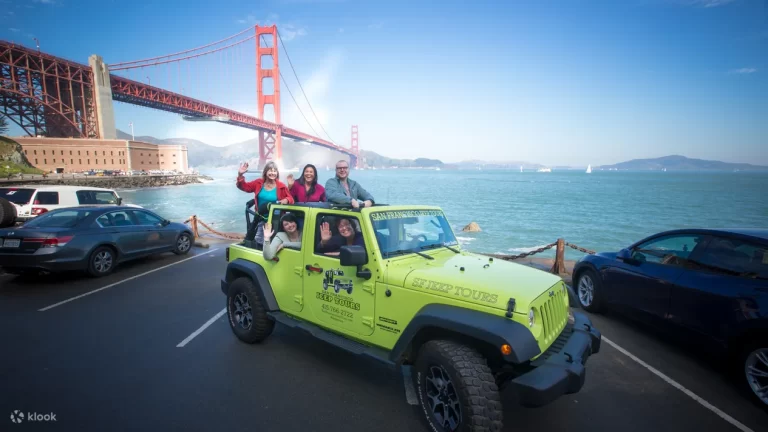
After exploring the working harbor, a private city tour can connect Fisherman’s Wharf with the Golden Gate Bridge, Presidio, Palace of Fine Arts and San Francisco neighborhoods.
Private San Francisco Jeep City Tour →
Frequently Asked Questions About the Historic Fishing Fleet
Is there still a working fishing fleet at Fisherman’s Wharf?
Yes. Fisherman’s Wharf remains connected to commercial fishing, although the size, composition and daily activity of the fleet vary by season, fishery and market conditions.
Why is it called Fisherman’s Wharf?
The district developed around a working fishing harbor, seafood handling and businesses serving fishermen and their families.
Who were the original fishermen at Fisherman’s Wharf?
Italian immigrant fishermen and their families played a major role in shaping the neighborhood. Many brought fishing techniques, boat designs, songs, food traditions and maritime customs from Italy.
What were feluccas?
Feluccas were small lateen-rigged fishing boats modeled on Mediterranean craft. In San Francisco, period accounts describe them as often painted green and sometimes named for patron saints.
Did fishermen really sing in the fog?
Historic Wharf accounts describe captains singing—sometimes even Verdi arias—in thick fog. The songs provided entertainment, but they also helped nearby crews know another boat was close when visibility was poor.
How did fishermen predict the weather before modern forecasts?
Period accounts describe fishermen reading the moon, tides, halos around the moon, animal behavior and sea conditions. These methods belonged to practical waterfront experience rather than modern meteorology.
What were Monterey Hull boats?
Monterey Hull boats were a later generation of small fishing craft associated with the shift from sail to gasoline engines. Engines increased range, reliability and the ability to haul nets and lines.
How did diesel boats change the fleet?
Larger diesel-powered commercial boats provided greater range, capacity and power, creating a third major technological phase after sail-powered feluccas and gasoline-powered Monterey-style craft.
What is the connection between the fishing fleet and cioppino?
Cioppino is rooted in San Francisco’s Italian-American fishing community and became a way to turn mixed seafood from the day’s catch into a hearty tomato-based stew.
How much did early Fisherman’s Wharf fishermen earn?
Older Wharf histories describe earnings of only a few dollars per week for some early fishermen. Exact amounts varied, but the broader point is that the work was demanding and poorly paid by modern standards.
Did fishermen really hitch rides behind steamers?
One colorful Wharf story says fishermen sometimes tossed grappling hooks into the rudder chains of passing steamers to catch a tow home. It is best treated as part of the neighborhood’s historic waterfront lore.
What should I see near the fishing fleet?
Combine the harbor with the Dungeness crab stands, Fishermen’s & Seamen’s Memorial Chapel, Musée Mécanique, PIER 39 and the World War II vessels along the northern waterfront.
Information provided by the Fisherman’s Wharf Merchants Association