Fisherman’s Wharf San Francisco: Fun Facts, Things to Do & Insider Tips
Fisherman’s Wharf may be one of San Francisco’s most famous visitor neighborhoods, but there is a lot more here than souvenir shops and clam chowder in sourdough bowls.
This stretch of the northern waterfront combines working fishing boats, maritime history, cable cars, sea lions, historic ships, bay views, seafood stands, family attractions and some wonderfully quirky San Francisco stops—all packed into a relatively walkable neighborhood.
If this is your first visit to San Francisco, the Wharf is also a practical place to start. From here you can easily explore PIER 39, Ghirardelli Square, Hyde Street Pier, North Beach, Lombard Street and several of San Francisco’s best waterfront attractions.
And yes—there are still plenty of crabs.
Quick Guide to Fisherman’s Wharf
- Best for: First-time visitors, families, food, maritime history and bay views
- Time needed: About 2–4 hours for the neighborhood; longer if adding Alcatraz, a bay cruise or museums
- Good to combine with: North Beach, Lombard Street, Chinatown or the Marina
- Easy without a car? Absolutely
- Best advice: Do not spend your entire visit on PIER 39. The historic Wharf is much bigger—and more interesting—than one pier.
Explore our complete Fisherman’s Wharf attraction guide →
Why Is Fisherman’s Wharf Important?
Long before Fisherman’s Wharf became one of San Francisco’s best-known visitor destinations, this was a working waterfront.
Fishing became an important part of the neighborhood during and after the California Gold Rush, when immigrant fishermen—including large Italian and Chinese fishing communities—worked the waters around San Francisco Bay and the Pacific coast.
Italian fishermen became particularly associated with the Wharf. Early boats were often small lateen-rigged sailing vessels similar to those used in their homeland, and generations of fishing families helped establish the character of the waterfront that visitors still see today.
The historic fishing industry is not simply a story from a museum display. A working fishing fleet remains part of Fisherman’s Wharf, making this one of the unusual San Francisco visitor districts where tourism and maritime industry still overlap.
Learn more about the Historic Fishing Fleet →
7 Fun Facts About Fisherman’s Wharf
1. Parts of Today’s Wharf Were Built on Rubble From the 1906 Earthquake
The earthquake and fires of 1906 devastated huge portions of San Francisco.
Some of the rubble from destroyed buildings was eventually used as fill along the northern waterfront. Part of the modern Wharf sits on this created land.
That means there is quite literally a layer of old San Francisco underneath parts of the waterfront.
2. Fisherman’s Wharf Is Still a Working Fishing Neighborhood
It is easy to forget this when walking past restaurants and souvenir shops, but the fishing fleet is still an important part of the Wharf’s identity.
Look beyond the busiest tourist areas and you can still see commercial boats, fishing equipment and traces of the industry that gave the neighborhood its name.
Explore the Historic Fishing Fleet and the small Fishermen’s & Seamen’s Memorial Chapel nearby.
3. Dungeness Crab Is Practically the Wharf’s Mascot
Long before the neighborhood became famous for chocolate and sea lions, Dungeness crab was helping define Fisherman’s Wharf cuisine.
The fishing grounds have changed over generations, but crab remains one of the foods most closely associated with the neighborhood.
You will still find traditional outdoor crab stands selling cracked crab, crab cocktail and other seafood near the heart of the historic Wharf.
Explore the historic Dungeness Crab Stands →
4. You Can Arrive on a Moving National Historic Landmark
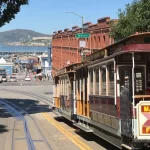
San Francisco’s cable cars are not replicas or amusement-park rides. They are part of the city’s operating transportation system—and the Powell-Hyde line ends right at Fisherman’s Wharf.
The turnaround at Hyde and Beach streets is one of the most recognizable sights in the neighborhood.
The ride itself can be as memorable as the destination, particularly when the car climbs and descends Russian Hill before reaching the waterfront.
See the Hyde Street Cable Car & Turnaround →
5. Fisherman’s Wharf Has Two Incredible World War II Ships
Pier 45 is home to the SS Jeremiah O’Brien, a surviving Liberty ship, and the USS Pampanito, a World War II submarine.
Even visitors who do not consider themselves maritime-history buffs are often surprised by how interesting these vessels are up close.
Explore the WWII Liberty Ship & USS Pampanito →
6. One of San Francisco’s Weirdest Museums Is Completely at Home Here
The Musée Mécanique is filled with antique coin-operated arcade machines, mechanical amusements and wonderfully strange artifacts.
It feels less like a polished modern museum and more like someone opened the doors to an enormous collection of vintage carnival oddities.
That is exactly why we like it.
7. A Colony of Sea Lions Basically Took Over PIER 39
California sea lions began gathering in large numbers around PIER 39 after the 1989 Loma Prieta earthquake.
Today they are among the most famous residents of the San Francisco waterfront.
They are noisy, occasionally ridiculous and under no obligation whatsoever to pose nicely for your vacation photos.
Visit our PIER 39 & Sea Lions guide →
Best Things to Do at Fisherman’s Wharf
There is enough around the Wharf to fill anything from an hour to an entire day.
See the Sea Lions at PIER 39
PIER 39 is touristy.
It is also fun.
Both statements can be true.
Walk toward the outer edge of the pier for views across San Francisco Bay, then stop at K-Dock to see the famous sea lions.
Walk Through the Historic Fishing Fleet
This is the part of Fisherman’s Wharf that gives the neighborhood some soul.
Walk around the fishing harbor, look at the boats and remember that the neighborhood existed because people came here to make a living from the sea.
Historic Fishing Fleet guide →
Explore Hyde Street Pier
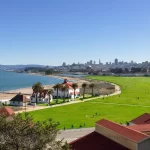
Historic ships line the waterfront at Hyde Street Pier, immediately beside Aquatic Park.
Even if you do not board the ships, the pier area is worth exploring for the waterfront atmosphere and views.
Walk Out on Municipal Pier
Want an easy waterfront walk without buying a ticket?
Head into Aquatic Park and Municipal Pier.
The curved pier gives you broad views toward Alcatraz, Angel Island, the Bay and portions of the Golden Gate Bridge.
It is also one of the best places near Fisherman’s Wharf to put a little distance between yourself and the crowds.
Eat Something With Dungeness Crab in It
Cracked crab. Crab cocktail. Crab cakes. Crab sandwich.
Possibly something involving garlic, butter and a complete disregard for clean clothing.
This is Fisherman’s Wharf. Lean into it.
See the historic crab stands →
Stop at Ghirardelli Square
The former chocolate-factory complex at the western edge of Fisherman’s Wharf has shops, restaurants and dramatic views over Aquatic Park.
Chocolate remains the obvious reason many people come.
We are not here to judge.
Ghirardelli Square visitor guide →
Visit Musée Mécanique
Bring a few dollars and prepare to discover how bizarre entertainment could be long before smartphones.
Vintage mechanical games, fortune tellers, arcade machines and other oddities make this one of the Wharf’s most entertaining quick stops.
Visit Umbrella Alley
For something completely different, stop at Umbrella Alley, an interactive art space featuring murals and installations created by Bay Area artists.
It is a quick detour from the main Wharf attractions and one of the neighborhood’s most colorful photo stops.
Take the Cable Car
If you have never ridden a San Francisco cable car, Fisherman’s Wharf is one of the easiest places to start.
The Powell-Hyde line reaches the waterfront at Hyde and Beach streets, close to Aquatic Park and Ghirardelli Square.
Hyde Street Cable Car & Turnaround guide →
Visit Alcatraz
The official Alcatraz ferry departs from Pier 33, just east of Fisherman’s Wharf.
If Alcatraz is a priority, reserve it in advance and build the rest of your Wharf visit around your confirmed ferry time.
Explore our Alcatraz Island guide →
A Good 2-Hour Fisherman’s Wharf Walking Route
- Start at PIER 39
- See the sea lions
- Walk west toward the historic fishing harbor
- Visit the crab stands
- Stop at Musée Mécanique
- See the WWII ships at Pier 45
- Continue to Hyde Street Pier
- See the cable car turnaround
- Walk through Aquatic Park
- Finish at Ghirardelli Square
This route gives you a much better sense of Fisherman’s Wharf than spending the entire visit inside PIER 39.
If you have another hour, continue uphill toward Lombard Street or east into North Beach & Little Italy.
Insider Tips for Visiting Fisherman’s Wharf
Go Beyond PIER 39
PIER 39 is only one piece of Fisherman’s Wharf.
The historic harbor, Pier 45, Musée Mécanique, Hyde Street Pier, Aquatic Park and Ghirardelli Square are all worth exploring.
Arrive Earlier if You Prefer Smaller Crowds
The waterfront generally feels calmer earlier in the day before the biggest waves of visitors arrive.
That is especially helpful if you want cleaner photographs around the historic fishing boats and waterfront.
Wear Layers
The waterfront can be cool and windy even when other San Francisco neighborhoods feel warm.
A light jacket earns its luggage space surprisingly often.
Skip the Car if You Can
Fisherman’s Wharf is one of the easiest visitor areas to reach by transit.
Cable cars, historic streetcars, buses, taxis and rideshares all serve the neighborhood.
Walk Into North Beach
One of the best things about Fisherman’s Wharf is what sits immediately behind it.
Within a short walk you can be eating Italian food in North Beach, relaxing in Washington Square Park or climbing toward Coit Tower and Telegraph Hill.
Fisherman’s Wharf With Kids
The Wharf is one of the easiest San Francisco neighborhoods for families because so many attractions sit within a relatively compact area.
- PIER 39 and the Sea Lions
- Musée Mécanique
- WWII Liberty Ship & USS Pampanito
- Hyde Street Cable Car
- Aquatic Park & Municipal Pier
- Ghirardelli Square
- Umbrella Alley
Is Fisherman’s Wharf Too Touristy?
Yes.
And that is not necessarily a reason to skip it.
Fisherman’s Wharf is unapologetically one of San Francisco’s major visitor districts. There are souvenir shops, crowds and plenty of places designed squarely for tourists.
But there is also genuine history here.
The fishing fleet is real. The ships are real. The cable cars are real. The bay views are spectacular. The Dungeness crab tradition goes back generations.
The trick is simply to see both versions of the Wharf.
Enjoy the sea lions and the chocolate sundae.
Then walk down a pier, look at the fishing boats and explore some of the history underneath the tourism.
What Else Is Near Fisherman’s Wharf?
North Beach
Walk into San Francisco’s historic Italian neighborhood for cafés, restaurants, Washington Square and Beat Generation history.
Lombard Street
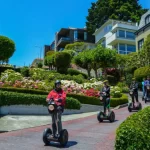
The famous crooked block is uphill from the waterfront in Russian Hill.
Russian Hill
Explore one of San Francisco’s classic hilltop neighborhoods surrounding Lombard Street and the northern waterfront.
Chinatown
Continue through North Beach and you can easily connect Fisherman’s Wharf with one of San Francisco’s most historic neighborhoods.
Coit Tower & Telegraph Hill
Telegraph Hill rises directly behind the eastern side of the Wharf.
Explore Coit Tower & Telegraph Hill →
Want to See More of San Francisco From Fisherman’s Wharf?
Fisherman’s Wharf is also a convenient starting point for private sightseeing.
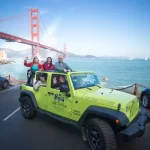
San Francisco Jeep Tours
Private open-top Jeep tours are particularly useful if you want to move beyond the waterfront and connect attractions such as the Golden Gate Bridge, Presidio, Palace of Fine Arts, Golden Gate Park and other neighborhoods in a limited amount of time.
Explore San Francisco Jeep Tours →
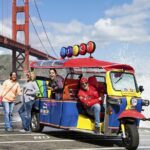
Lucky Tuk Tuk Tours
Private electric Tuk Tuk sightseeing offers a different way to explore San Francisco’s neighborhoods, landmarks and evening city lights.
The compact vehicles are especially fun for city sightseeing, photo stops, Chinatown, North Beach and other urban routes.
Compare Private San Francisco Tours →
Frequently Asked Questions About Fisherman’s Wharf
Is Fisherman’s Wharf worth visiting?
Yes, particularly on a first trip to San Francisco. It combines waterfront views, maritime history, seafood, cable cars, PIER 39, museums and easy access to several nearby neighborhoods. The key is to explore beyond the most commercial areas.
How much time should I spend at Fisherman’s Wharf?
Allow roughly two to four hours for a relaxed visit to the neighborhood itself. Add considerably more time if you plan to visit Alcatraz, take a bay cruise or spend significant time inside museums.
Is PIER 39 the same as Fisherman’s Wharf?
No. PIER 39 is one attraction within the larger Fisherman’s Wharf neighborhood.
Where are the sea lions?
The famous California sea lions gather around the docks at PIER 39.
Where does the Alcatraz ferry leave?
Official Alcatraz ferries depart from Pier 33 on the Embarcadero, just east of the main Fisherman’s Wharf area.
Can I ride a cable car to Fisherman’s Wharf?
Yes. The Powell-Hyde cable car line terminates at Hyde and Beach streets at Fisherman’s Wharf.
Do I need a car to visit Fisherman’s Wharf?
No. The neighborhood is well served by public transportation, cable cars, historic streetcars, taxis and rideshares.
What should I combine with Fisherman’s Wharf?
North Beach, Chinatown, Lombard Street, Russian Hill, Telegraph Hill and Coit Tower are all natural additions to a Wharf visit.
More San Francisco Planning Resources
- Browse All San Francisco Attractions
- First Time in San Francisco
- San Francisco in 2, 3 or 4 Hours
- San Francisco Travel FAQ
- San Francisco Travel Blog
The Bottom Line: Don’t Skip the Wharf—Explore It Better
Fisherman’s Wharf gets plenty of criticism for being touristy.
Some of that criticism is fair.
But skipping the neighborhood entirely means missing a huge piece of San Francisco’s waterfront history, maritime culture and personality.
See the sea lions. Ride the cable car. Eat the crab. Visit the old ships. Wander past the fishing boats. Walk out on Municipal Pier.
Then keep exploring.
Fisherman’s Wharf works best not as the end of your San Francisco sightseeing day—but as a very entertaining place to begin it.