Home › San Francisco Attractions › Fisherman’s Wharf › SS Jeremiah O’Brien & USS Pampanito
Two WWII Veterans, Two Very Different Stories
Exploring the SS Jeremiah O’Brien and USS Pampanito
San Francisco’s northern waterfront offers something rare: the chance to walk through two very different World War II vessels in the same neighborhood. The SS Jeremiah O’Brien tells the story of the merchant ships and crews that moved troops and supplies across oceans. The USS Pampanito puts you inside the cramped, highly technical world of the Pacific submarine service.
Together they turn Fisherman’s Wharf into much more than a food-and-sea-lion stop. They offer an unusually tangible look at the logistics, machinery, danger and human experience of World War II at sea.
SS Jeremiah O’Brien: A Living Liberty Ship
Location: Pier 35, The Embarcadero, San Francisco
Why Visit the O’Brien?
- Last unaltered Liberty ship: The O’Brien is the last surviving Liberty ship in unaltered form and the only active Liberty ship in original configuration.
- D-Day connection: She made eleven English Channel crossings to the Normandy beaches during the D-Day invasion.
- Fully seaworthy: The ship remains operational and is certified for service.
- Explore nearly the whole vessel: Visitors can move from the engine room to the flying bridge.
- Working steam machinery: On scheduled Steaming Weekends, the ship’s 2,500-horsepower triple-expansion main engine operates.
- Living memorial: Visiting supports the National Liberty Ship Memorial and the volunteers who maintain and operate the ship.
The History of SS Jeremiah O’Brien
Built Fast for a World at War
The O’Brien was launched in June 1943 at New England Shipbuilding Corporation in South Portland, Maine. Liberty ships were designed for mass production during wartime, and the O’Brien was built in only 56 days.
She was one of 2,710 American-built Liberty ships constructed during World War II.
Seven Wartime Voyages
The O’Brien completed seven wartime voyages and became part of the enormous logistics system that kept Allied forces supplied.
D-Day & Normandy
Her most famous service came during the Normandy invasion. She made eleven crossings of the English Channel to the Normandy beaches, carrying vital cargo during Operation Overlord.
33 Years in the Mothball Fleet
After the war, the O’Brien entered the reserve fleet in Suisun Bay. She remained there for decades until preservationists and volunteers brought her back to life in 1979.
Saved From Scrapping
Rear Adm. Thomas J. Patterson played a central role in saving the ship. Volunteers removed preservation coatings, restored systems and returned the vessel to operation.
Return to Normandy in 1994
For the 50th anniversary of D-Day, the O’Brien crossed the Atlantic again and returned to Europe. The voyage became a remarkable demonstration of both Liberty-ship durability and volunteer restoration.
During the anniversary events, the ship was reviewed by Queen Elizabeth II and visited by the President of the United States.
What You Can Experience Aboard the O’Brien
Engine Room
See the huge machinery that powered a wartime cargo ship across oceans.
Flying Bridge
Climb high into the ship and see the waterfront from the vessel’s upper levels.
Steaming Weekends
Normally held on the third Saturday and Sunday of the month, when the main steam engine is operated.
Bay Cruises
The O’Brien schedules special San Francisco Bay sailings during the year.
Overnight Program
School groups, scouts and youth organizations can arrange overnight experiences on many Fridays and Saturdays.
Volunteer-Powered Preservation
The ship continues to operate because of extensive volunteer work, donations and visitor revenue.
USS Pampanito: A Memorial to the Silent Service
Location: Historic Pier 45, Fisherman’s Wharf
Why Visit Pampanito?
- Authentic WWII submarine: Pampanito is a Balao-class diesel-electric submarine built in 1943.
- Six war patrols: She completed six Pacific patrols during World War II.
- Combat record: The museum credits her with sinking six Japanese ships and damaging four others.
- National Historic Landmark: Pampanito is preserved as one of America’s most important surviving WWII submarines.
- Restored to 1945: The preservation program intentionally represents the submarine in its late-summer 1945 configuration.
- Immersive interior: Visitors experience the cramped torpedo rooms, control spaces, bunks and machinery of submarine life.
The History of USS Pampanito
Built in 1943
Pampanito was built at Portsmouth Navy Yard in New Hampshire and entered the war after an intensive training and fitting-out period.
Six Pacific War Patrols
Beginning in March 1944, Pampanito operated across the Pacific, including waters near Japan, the Philippines and Southeast Asia.
Combat Record
Across six war patrols, Pampanito is credited with sinking six enemy ships and damaging four others.
The POW Rescue
The submarine’s most dramatic story came during her third patrol in September 1944.
American submarines attacked a Japanese convoy without knowing that more than 2,000 British and Australian prisoners of war were aboard several transports. Four days after the attack, Pampanito returned to the area and discovered survivors in the water.
Pampanito rescued 73 prisoners of war. Other submarines were alerted and returned to rescue additional survivors. The episode became one of the most extraordinary rescue stories in U.S. submarine history.
Hunter’s Point Refit
After six patrols, Pampanito returned to San Francisco for a major 1945 overhaul at Hunter’s Point. New weapons, radar and other equipment were installed in preparation for another patrol.
The War Ends
While heading back toward the Pacific for a seventh patrol, the crew learned that Japan had surrendered. Pampanito returned to the Bay Area.
From Reserve Fleet to Museum
Pampanito was decommissioned after the war and later served as a Naval Reserve training platform. The Maritime Park Association assumed possession in the 1970s, beginning the long process of restoration and public interpretation.
Restoring Pampanito to 1945
Pampanito’s restoration is unusually specific. The goal is not simply to make the submarine look old; it is to represent a particular point in her life: late summer 1945.
That was the moment after her Hunter’s Point overhaul, when the boat had received updated radar, guns and other improvements and was preparing for a seventh patrol.
Preservation teams have searched for missing original equipment and spare parts across the country. Much of the onboard machinery and equipment has been restored to operating condition.
That level of detail makes Pampanito especially valuable for visitors who care about technical history rather than just the general atmosphere of a submarine.
O’Brien vs. Pampanito: Which Should You Visit?
| Experience | SS Jeremiah O’Brien | USS Pampanito |
|---|---|---|
| Ship Type | Liberty cargo ship | Balao-class submarine |
| Best For | D-Day, steam machinery, merchant shipping | Submarine warfare, technology, tight spaces |
| Location | Pier 35 | Pier 45 |
| Interior Feel | Large industrial ship | Extremely compact submarine |
| Operating Machinery | Main engine operates on Steaming Weekends | Many restored working components |
| Time | About 1–2 hours | About 1–1½ hours |
Current Visitor Details
SS Jeremiah O’Brien
Current hours: Daily, 10:00 AM–4:00 PM
General admission: $20 at time of this update; discounts and family rates available
Tour style: Self-guided dockside visit
Special programs: Steaming Weekends, Bay cruises, overnight programs
Official site: ssjeremiahobrien.org
USS Pampanito
Current hours: Daily, 10:00 AM–6:00 PM
Last boarding: 5:30 PM
Tour style: Self-guided museum visit; educational programming available
Programs: Day programs and overnight educational experiences
Official site: maritime.org/uss-pampanito
Accessibility: Both vessels are authentic historic ships. Expect stairs, ladders, narrow passageways and uneven surfaces. Check each museum’s current accessibility information before visiting if mobility access is important.
15 Fascinating Facts About the O’Brien & Pampanito
- SS Jeremiah O’Brien was built in only 56 days.
- She was one of 2,710 American-built Liberty ships.
- The O’Brien made seven wartime voyages.
- She made eleven English Channel crossings to the Normandy beaches.
- The O’Brien spent 33 years in the reserve fleet before restoration.
- She returned to Normandy for the 50th anniversary of D-Day in 1994.
- Her 2,500-horsepower steam engine still operates on scheduled Steaming Weekends.
- USS Pampanito completed six World War II patrols.
- Pampanito is credited with sinking six Japanese ships and damaging four.
- Pampanito rescued 73 Allied prisoners of war in September 1944.
- Her sixth patrol ended in April 1945.
- Pampanito received a major Hunter’s Point overhaul before what would have been her seventh patrol.
- Japan surrendered before Pampanito could begin that seventh war patrol.
- The submarine is restored specifically to its late-summer 1945 configuration.
- The two vessels are at different piers, making them complementary rather than side-by-side museum ships.
Explore More of Fisherman’s Wharf
Continue From the Waterfront Into San Francisco
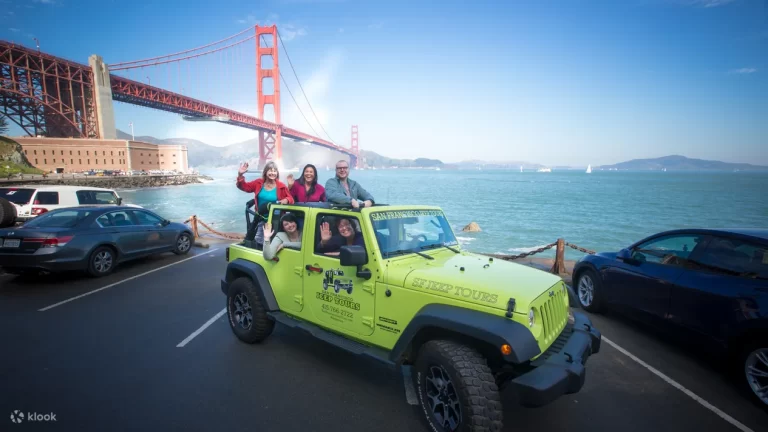
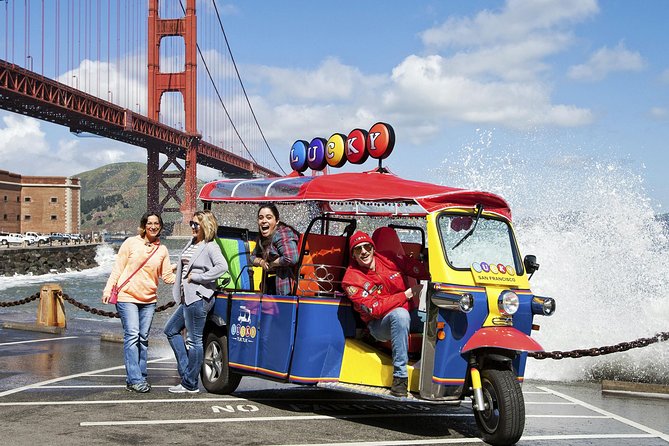
After visiting the WWII ships, a private city tour can connect Fisherman’s Wharf with the Golden Gate Bridge, Presidio, Palace of Fine Arts and major San Francisco neighborhoods.
Private San Francisco Jeep City Tour →
Frequently Asked Questions About SS Jeremiah O’Brien & USS Pampanito
Where is the SS Jeremiah O’Brien located?
The SS Jeremiah O’Brien is moored at the north end of Pier 35 on The Embarcadero in San Francisco.
Where is USS Pampanito located?
USS Pampanito is at Historic Pier 45 in the Fisherman’s Wharf district.
Are the two ships at the same pier?
No. The O’Brien is at Pier 35 and Pampanito is at Pier 45. Allow walking time between them.
What are the current SS Jeremiah O’Brien hours?
The ship’s official visitor page lists daily hours of 10:00 AM to 4:00 PM, year-round. Check the official site before visiting in case of cruise or event changes.
What are the current USS Pampanito hours?
The official Pampanito page lists daily hours of 10:00 AM to 6:00 PM, with last boarding at 5:30 PM.
Why is the SS Jeremiah O’Brien important?
It is the last unaltered Liberty ship in existence and the only active Liberty ship in original configuration. It made seven wartime voyages and eleven English Channel crossings to the Normandy beaches during the D-Day invasion.
Can you see the O’Brien’s engine operate?
Yes on scheduled Steaming Weekends. The ship normally operates its 2,500-horsepower triple-expansion steam engine on the third Saturday and Sunday of the month, subject to the ship’s current calendar.
Did the SS Jeremiah O’Brien return to Normandy?
Yes. In 1994 the ship sailed back to Europe for the 50th anniversary of the Normandy invasion and was reviewed by the Queen of England and visited by the U.S. President.
How many WWII patrols did USS Pampanito make?
Pampanito completed six Pacific war patrols during World War II.
How many ships did USS Pampanito sink?
The San Francisco Maritime National Park Association credits Pampanito with sinking six Japanese ships and damaging four others during her six patrols.
What is Pampanito’s POW rescue story?
During her third patrol in September 1944, Pampanito returned to waters where Japanese prison ships had been sunk and rescued 73 British and Australian prisoners of war from the sea. Other submarines rescued additional survivors.
Is USS Pampanito restored to its wartime appearance?
Yes. The preservation program specifically restores Pampanito to its late-summer 1945 configuration, representing the height of World War II submarine development.
Can groups sleep aboard these ships?
Yes. Both organizations offer educational overnight programs for eligible groups, subject to current schedules and requirements.
Which ship should I visit if I only have time for one?
Choose O’Brien if you are especially interested in D-Day, merchant shipping, large steam machinery and Liberty ships. Choose Pampanito if you want the tight interior experience of a World War II combat submarine.