Home › San Francisco Attractions › The Barbary Coast
Gold Rush Chaos, Waterfront Vice & a Trail Through Old San Francisco
The Barbary Coast: San Francisco History You Can Still Walk Through
San Francisco’s Barbary Coast was not a single attraction with a neat boundary. It was a rough-and-tumble waterfront entertainment district that grew out of the Gold Rush and became famous for saloons, gambling, dance halls, prostitution, violence, shanghaiing and political corruption.
Today, much of that landscape has vanished or changed names. But the story survives in Jackson Square, Chinatown, North Beach, old waterfront streets—and in the official Barbary Coast Trail, a 3.8-mile walking route marked by bronze sidewalk medallions.
The Gold Rush Creates a Wild Waterfront
The Barbary Coast grew out of the astonishing population boom that followed the California Gold Rush of 1849.
San Francisco changed almost overnight from a small settlement into a chaotic international port crowded with miners, sailors, merchants, opportunists and fortune seekers.
Law enforcement and city government struggled to keep pace. Gambling, drinking, prostitution and violence became deeply associated with the waterfront entertainment district.
Why the Barbary Coast Became Notorious
The district attracted sailors and miners looking for entertainment after months at sea or in the gold fields. Saloons, dance halls and concert rooms competed aggressively for customers.
Criminal groups including the Hounds and Sydney Ducks became part of the city’s early lawlessness, while vigilante movements periodically tried to impose order outside normal institutions.
The name “Barbary Coast” itself invoked the historic North African coast associated in the American imagination with piracy and predation.
Shanghaiing
One of the most enduring pieces of Barbary Coast lore is shanghaiing—the kidnapping, coercion or tricking of men into shipboard labor. Waterfront saloons and boarding houses developed reputations as places where an unlucky drinker might wake up at sea.
Pacific Street & “Terrific Street”
Pacific Street became a center of saloons, dance halls and nightlife. In the later Barbary Coast era, part of the district was promoted under the nickname “Terrific Street,” an attempt to turn its notorious reputation into entertainment marketing.
The 1906 Earthquake Changes the District
The earthquake and fire of 1906 destroyed much of the old Barbary Coast.
Rebuilding created an opportunity for property owners and civic boosters to reshape the district. Bars and dance halls returned, but the new Barbary Coast operated in a city increasingly interested in regulation and respectability.
Reform & the End of the Classic Barbary Coast
By the 1910s, reform campaigns were closing in on the district.
Police restrictions targeted dancing and the employment of women in saloons. Anti-brothel enforcement and the Red Light Abatement movement further reduced the vice economy.
By 1917, the classic Barbary Coast era was effectively ending, although nightlife and waterfront culture continued to evolve in new forms.
The Barbary Coast Trail Today
The modern Barbary Coast Trail was conceived by Daniel Bacon in the 1990s after he walked Boston’s Freedom Trail and imagined a similar route through San Francisco history.
Working with the San Francisco Historical Society, the project spent years securing permits and funding. The first sidewalk medallions were installed in 2000.
Today the official route stretches about 3.8 miles from the Old Mint area to Aquatic Park and is marked by roughly 180 bronze medallions and arrows.
The trail connects around 20 major historic sites and crosses Downtown, Union Square, Chinatown, Jackson Square, North Beach, Telegraph Hill, the northern waterfront and Fisherman’s Wharf.
Historic Stops Along the Route
- Old U.S. Mint
- Union Square
- Maiden Lane
- Old St. Mary’s Cathedral
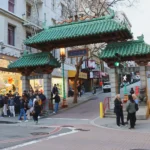
- Chinatown and historic temples
- Portsmouth Square
- Jackson Square Historic District
- Old Ship Saloon
- North Beach
- Coit Tower & Telegraph Hill
- Fisherman’s Wharf
- San Francisco Maritime National Historical Park and Aquatic Park
The trail is broader than Barbary Coast vice history alone. It deliberately tells the story of how San Francisco grew from Gold Rush port to modern city.
Plan a Barbary Coast Walk
Length
About 3.8 miles.
Markers
Bronze medallions and arrows in the sidewalk.
Terrain
Mostly flat or gently sloping, though side trips can add hills.
Time
Several hours for the full route with stops.
The trail organization offers downloadable audio tours, maps, printed guides and guided tours. You can also walk only the section that best fits your day.
12 Fun Facts About the Barbary Coast
- The district grew out of the 1849 Gold Rush boom.
- Pacific Street became one of its best-known nightlife corridors.
- The nickname referenced the historic Barbary Coast of North Africa.
- Shanghaiing became one of the district’s most famous legends and realities.
- Vigilante movements repeatedly tried to impose order on early San Francisco.
- The 1906 earthquake and fire destroyed much of the old district.
- Post-1906 nightlife returned in a more regulated form.
- Major reform pressure intensified in the 1910s.
- The official Barbary Coast Trail was conceived in 1994.
- The first sidewalk medallions were installed in 2000.
- The trail is about 3.8 miles long.
- The route connects the Old Mint to the northern waterfront and Aquatic Park.
Explore Old San Francisco Without Spending the Whole Day Walking
A private sightseeing tour can connect Chinatown, North Beach, the waterfront and other historic districts, while the Barbary Coast Trail is ideal when you want to go deeper on foot.
Frequently Asked Questions About the Barbary Coast
What was San Francisco’s Barbary Coast?
The Barbary Coast was the name given to a notorious entertainment and vice district that grew around the waterfront after the Gold Rush, especially along Pacific Street and nearby blocks.
When did the Barbary Coast develop?
Its roots date to the Gold Rush era beginning in 1849, when San Francisco’s population exploded and the waterfront filled with sailors, miners, gambling halls, saloons and entertainment businesses.
Why was it called the Barbary Coast?
The nickname compared the district’s reputation for lawlessness and predatory behavior with the historic Barbary Coast of North Africa.
What was shanghaiing?
Shanghaiing was the practice of kidnapping or coercing men into service aboard ships, often associated in popular history with waterfront saloons and boarding houses.
What happened to the Barbary Coast in 1906?
The earthquake and fire destroyed much of the district. Rebuilding brought new dance halls and nightlife, but the post-1906 area was more regulated than the earlier Barbary Coast.
When did the Barbary Coast era end?
Reform campaigns and changing laws steadily reduced the district’s vice economy. Restrictions in the 1910s and anti-brothel enforcement in 1917 helped bring the classic Barbary Coast era to an end.
Can you still see Barbary Coast history today?
Yes. Jackson Square preserves an important cluster of Gold Rush-era buildings, while places such as the Old Ship Saloon, Portsmouth Square and nearby historic streets help tell the story.
What is the Barbary Coast Trail?
The Barbary Coast Trail is San Francisco’s official historical walking trail, connecting major historic sites from the Old Mint to Aquatic Park.
How long is the Barbary Coast Trail?
The official trail is about 3.8 miles long and is mostly flat or gently sloping.
How do you follow the trail?
Bronze medallions and arrows embedded in the sidewalk mark the route. The trail organization currently describes roughly 180 sidewalk markers.
Where does the trail begin and end?
The southern end begins near the Old Mint at 5th and Mission streets and the northern end reaches the San Francisco Maritime National Historical Park near Fisherman’s Wharf and Aquatic Park.
What neighborhoods does the trail cross?
The route passes through or alongside Downtown, Union Square, Chinatown, Jackson Square, North Beach, Telegraph Hill, the northern waterfront, Fisherman’s Wharf and Aquatic Park.
Is the Barbary Coast only about crime and vice?
No. The broader history also includes the Gold Rush, immigration, shipping, architecture, the Pony Express, Chinese American history, Italian North Beach, the Beat era and waterfront development.
How long should I allow?
Walking the full 3.8-mile trail with meaningful stops can take several hours. You can also explore one segment at a time.
Can I use an audio tour?
Yes. The Barbary Coast Trail organization offers downloadable audio tours, maps and printed guides, and guided tours may be available by appointment.
Information provided by Wikipedia